Why has the modern educational establishment become so obsessed with standardized testing and uniformity of measurement? When did so many people start believing that you could plot learning as numbers and graphs — and still teach children what they need to know?
That’s what I kept thinking as I read about a $1.1 million project to look into designing “galvanic skin response” bracelets for students to wear that would measure their degree of engagement with what they were listening to. The goal is to find out whether physiological feedback from these sensors could tell teachers whether students are learning or not.
If you’re not familiar with the phrase “galvanic skin response,” it’s just the name for the process of measuring how electricity flows through the skin depending on changes in moisture. It’s the principle upon which so-called lie detectors work. (Those things are bogus, but that’s another story entirely.)
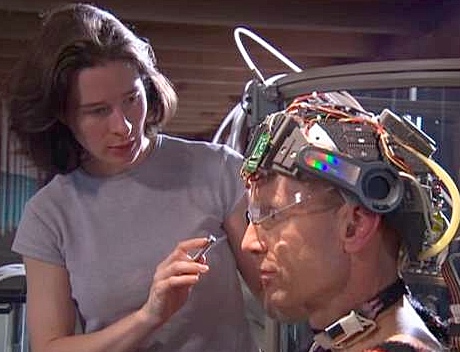
Is this really the way some people believe we should decide whether kids are learning? Are we going to keep going until we strap a sensor helmet on kids every morning so we can monitor their thoughts for the full day?
 Christmas stands for quiet truths: love, faith, community and family
 Some people are so desperate to feel alive they’ll hurt themselves
 Existential crisis makes me ask: Can I ever trust you to love me?
 We can’t have real freedom without also allowing discrimination
 A ‘faux father’ loves being adored, but a real father is there full-time
 THE McELROY ZOO: Meet Anne, the cat who’d love to live in a shoe
 I love my iPad, but I suspect that books are better for ‘deeper’ learning