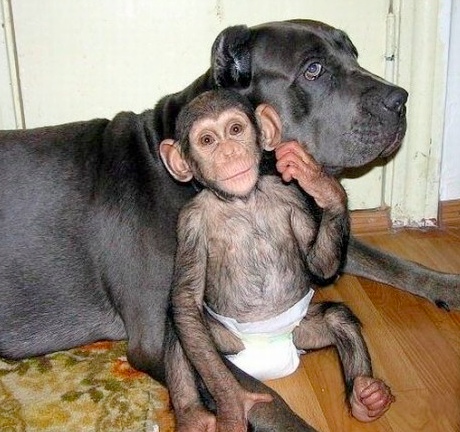
I’ll probably never know the full story behind this — and it has nothing to do with the things we normally talk about around here — but it was too amazing not to share.
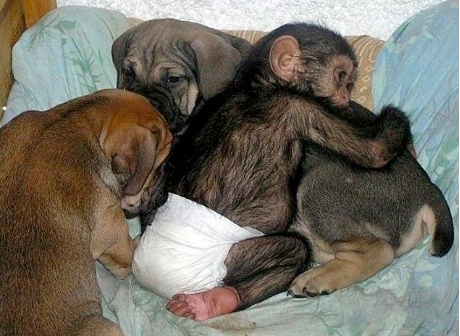
After a mother chimp died at a zoo, one of the zookeepers brought her baby monkey home in order to care for it. The employee’s dog had just had puppies. Unexpectedly, the mother dog bonded with the baby chimp and the chimp ended up seeing the puppies as his siblings. You’ll find nine pictures on this page. I’ve included a couple just to give you an idea. If you love dogs — or chimps — you’re going to love this.
If anybody happens to run across the full story, such as where this happened, I’d love to update this.
Note: I still haven’t found anything definitive about this, but Jeremy Barger found a link with a slightly different version of the story. According to that version, it happened two years ago at a Russian zoo and the chimp’s mother had rejected him instead of having died. It’s hard to say which version is correct.
 I’ll make fun of your Super Bowl, but you can’t make fun of my Spock ears
 Do they allow dogs at the hotel? Question is why they allow people
 Taking Donald Trump seriously means ‘Idiocracy’ is already here
 I want to live a life my kids will want to emulate as they grow up
 Shockingly, it’s true: You can love liberty and still be a Jesus follower
 It’s odd how ‘choice’ can mean ‘no choice’ with the state involved
 Self-disclosure of flaws is how I stop myself from deceiving you
 Search for new partner leaves me wondering where she’s waiting
 Little girl helped me figure out why I’m not attracted to her mom