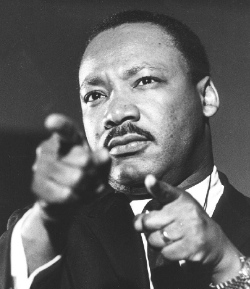
 I’m not celebrating Martin Luther King Jr.’s birthday today, but it has nothing to do with disagreeing with the man or his stated goals. I simply have no use for the political agenda of the people who claim to be carrying on his legacy.
If you listen to mainstream media accounts of the day, all decent people are joining together to celebrate civil rights and freedom. Here in Birmingham, the local newspaper has its coverage headed with these words: “Alabamians join together in honor of Martin Luther King Jr. — From Huntsville to Mobile, people are stopping to remember the civil rights icon with charity projects, speeches and marches.”
That’s a simplistic and sanitized version of what this day means. The implication of much of what you read today seems to be that anyone who doesn’t celebrate King’s birthday must be racist. The truth is more complicated and we need to admit that.
I live in the heart of where the Civil Rights Movement took place. Some of the worst abuses of white political power were on display in Birmingham as black men and women such as King (and some of their white allies) demanded change. There’s a Birmingham Civil Rights Institute if you need documentation of some of the evils of the day.
Black men and women didn’t have the same rights under state and local laws in many places, mostly in the South. It was difficult or impossible for blacks to vote. The law required black children to attend inferior schools and denied them access to schools for white children. Jim Crow laws required the segregation of races in various public facilities, such as waiting rooms, restrooms and even water fountains. Black people had to be afraid of how they were going to be treated by police and other public officials.
 Why waste time on Ukraine war? Focus on your own future instead
 Reality frequently doesn’t match fantasy when you know full story
 Mom of out-of-control teen thug must share blame for ugly arrest
 FRIDAY FUNNIES
 Sorry, Newt: It’s not ‘isolationism’ to oppose invading other countries
 Can we find ways to separate love of home from worship of government?
 Lesson for McCain’s ’08 voters: The lesser of two evils is still evil
 Was he angry to lose his family? Or because he lost his control?
 Would getting away from civilization help us live better?