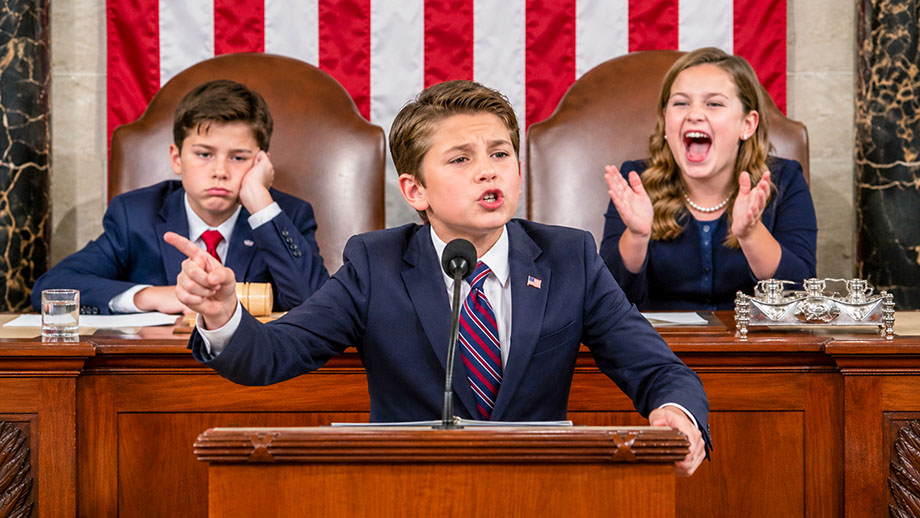
I’m trapped in a society where all the important public figures are middle schoolers.
Not actual middle schoolers, of course. Many of the loudest and most influential voices in our culture are wealthy executives, media personalities, political leaders and adults with millions of followers. But the most popular and prominent of them behave with the emotional maturity of a 12-year-old trying to dominate a cafeteria conversation.
Every disagreement becomes a playground fight. Every issue becomes tribal. Every insult demands retaliation. Every thought must be expressed immediately. Every opinion must be performed publicly. Every emotional reaction becomes content.
And the louder, more impulsive and more outrageous someone behaves, the more visibility that person receives.
That’s not happening by accident.
Years ago, media critic Neil Postman warned that television was transforming public life into entertainment. (Read Postman’s “Amusing Ourselves to Death.” Please.) Television rewarded personalities more than ideas. It rewarded emotional immediacy more than thoughtful reflection. Politics, journalism, education and religion all slowly began adapting themselves to the demands of a medium built primarily for amusement.
But television now seems almost quaint — and downright intellectual — compared to what came afterward.
Social media didn’t merely continue those trends. It automated and intensified them.
 Asking wrong questions keeps us trapped with the wrong answers
 We have a hunger for love just as strong as the need for food, water
 The drama of a world gone mad leaves me longing for real peace
 Primitive instincts: Why do we ‘fall in love’ with politicians?
 ‘American Idol’ for politics? Here’s real democracy in 2012 election
 Arming teachers for safety likely to create gang that can’t shoot straight
 Here is another random act of kindness amid hurricane recovery
 Modern obsession with ‘hot girls’ teaches everybody to be shallow
 What are your options when the state gives your children lousy teachers?


