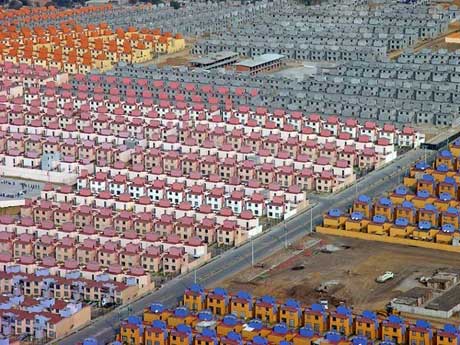
Life is full of tradeoffs. If we choose one thing that we want, we tend to be forced to give up a degree of something else we also value. Being happy isn’t a matter of getting everything we want. It’s a matter of finding the right tradeoffs — deciding what matters most.
It seems as though most modern people have chosen — perhaps unconsciously — the path of accumulating material things over emotional connections with other people. So millions of them sit in their suburban “boxes” and wonder why they’re miserable, even though they’ve achieved what they thought they wanted.
I’m thinking about this because of an old song that someone introduced me to over the weekend. (Listen to the song at the end of the article.) Malvina Reynolds was a singer/songwriter and political activist in the ’60s. I doubt I would have agreed with many of her political positions, but I found myself strongly identifying with her song, “Little Boxes,” which satirizes the antiseptic and meaningless lives that she saw people living in suburban tract homes.
I’m of two minds about people who protest against this “little plastic life.” There’s a part of me that appreciates the standard of living we’ve come to have because of the standardization and mass production of our lives. A world in which everything was custom-built individually is a world where not nearly as many people can afford nice houses and other material things.
On the other hand, there’s a huge part of me that’s repulsed by the world those things have created.
 A tax on folks who can’t do math? Winning may be worst possibility
 Midlife becomes big crisis when our self-deception stops working
 Epiphany: My message changed when I selected a new audience

 Practically and legally, it’s true: Good fences make good neighbors
 As sowing comes before reaping, culture comes before politics
 Modern life doesn’t have to be as complicated as we try to make it
 Anatomy of a lie: Why destroy credibility by exaggerating facts?
 Conservatives have lost their way as few defend individual freedom
 Despite advantages to digital books, there’s still nothing like ‘real’ books


