Almost nothing is left of all the things I felt so certain about when I was young.
It’s not just that I didn’t know as much as I thought I knew. It’s worse. What I’ve slowly realized is that much of what I knew at the time — even that which I was certain about — was wrong. I’ve had to unlearn many of those things.
In some ways, it would have been easier if I had simply been ignorant. If I don’t know something, there’s an empty space where truth can eventually fit. I can learn something new and fill in what I didn’t know before.
But when I already “know” something that isn’t true, there’s no empty space. The space is already occupied by something false.
And that false belief changes the way I understand everything else.
I can look directly at evidence that ought to tell me I’m wrong and find some way to explain it away. (I’m really good at that.) I can encounter something that ought to be obvious and fail to see it because it doesn’t fit what I already “know.” I can spend years trying to make new pieces of truth fit into an old framework that was wrong from the beginning.
Sometimes we can’t learn the truth until we first unlearn the falsehood that makes the truth seem impossible.
That happened to me over and over.
In the last decade or so, I’ve allowed myself to be a beginner in the struggle for life’s truth and wisdom. I’ve accepted that I know next to nothing.
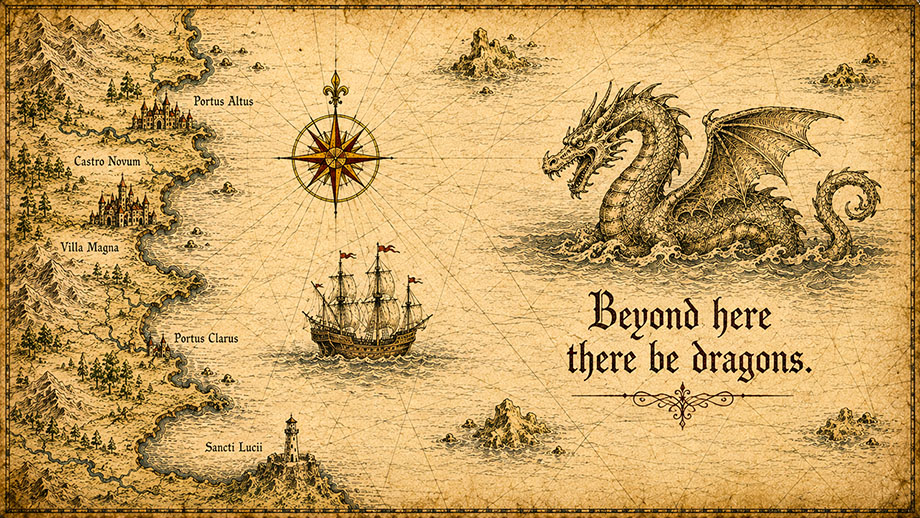
That would have terrified the younger version of me. I was once heavily invested in the things I believed. I needed to be right. I needed the world to make sense according to the map I had been given and according to the things I had decided were true.
Today, I’m willing to abandon any belief or idea if I discover it conflicts with truth and wisdom. I no longer feel the need to convince you that I’m right. I’m happy to share what I’ve learned — and which paths turned out to be blind alleys — but I’m indifferent about whether you agree with me or not.
Years ago, I remember realizing something about God and truth that has become a guiding principle for me. If God is truth — as I believe — then wherever I find truth, that’s where God is. And that’s true even if it conflicts with what confident people have told me I ought to believe.
Truth is more important than my ego. It’s more important than your opinion. It’s more important than any dogma I was taught.
Where I find some truth, I find God.
That realization gave me permission to question things I had once been afraid to question. If something is really true, examining it isn’t going to destroy me. And if something I believe turns out not to be true, I don’t want to protect it simply because I’ve believed it for a long time.
I don’t want to defend a lie just because I once mistook it for truth.
The hardest part has been realizing how much of what I thought I knew wasn’t something I had discovered for myself. I had inherited a map of reality from other people. Some of it came from my family. Some came from schools. Some came from churches. Some came from the larger culture. Some came from people who meant well and were simply passing along the maps they had inherited from someone else.
I followed that map because I didn’t know the map was wrong. Doing that left me lost and confused.
That’s the dangerous thing about false knowledge. A man who knows he’s lost starts looking for the right path. A man who confidently believes his map is correct can keep walking in the wrong direction for years.
I did plenty of walking in wrong directions.
It’s taken me many years to be ready to be the man I need to be. In some respects, that baffles me. It surprises me because I still don’t know everything, and I still don’t have everything figured out.
But I finally understand that I don’t need to have everything figured out.
For most of my life, I thought wisdom meant having the right answers. Now I think it has far more to do with learning how to recognize truth — and being willing to abandon whatever gets in the way of seeing it.
When we’re sincerely trying to learn the truth, we tend to think it’s just a matter of discovering some new piece of information. But I’ve slowly realized that learning the truth often involves chipping away falsehoods first — and my painful experience is that it’s harder to throw away things we’re already committed to believing than it is to adopt some new fact or truth.
After all of this change, I still feel like a beginner.
But I feel as though I’m finally a beginner who knows where the path is. Before this, I was just a confused man wandering in the wilderness with a map that I didn’t realize was wrong.
I don’t know exactly where this path leads. I don’t know what else I’m going to have to unlearn along the way.
But I finally understand that finding truth sometimes requires more than learning something new.
Sometimes we have to throw away the falsehoods that have kept us from seeing what was right in front of us all along.
 Jesse Jackson Jr. demands Obama hire 15 million unemployed Americans
 Scared 4-year-old sick of campaign; don’t tell her it’s back again in 2016
 Why waste time on Ukraine war? Focus on your own future instead