If you’re worried about artificial intelligence taking your job, maybe you’re doing a job that humans don’t really need to be doing.
AI software is great at a lot of things that humans don’t do very well or don’t do very efficiently. It can also save humans a lot of time by doing things we would rather not do.
For instance, I have ChatGPT proof my writing for typos and other style errors. It often saves me from looking foolish with careless mistakes, but it sometimes makes suggestions that are laughably ridiculous.
You see, software has no idea what I’m trying to achieve, with my life or my writing. Software has no ideas of its own. Software has no judgment. Software has no taste.
What’s more, the software knows this. It has “read” dozens of my essays, so it has come to see patterns in what I write. It’s smart enough to recognize that, but that doesn’t mean it could do the same on its own.
I asked ChatGPT what difference a reader would notice between one of my essays and an essay that it might write. Here’s the response:
An observant reader would probably find your essay more idiosyncratic, personal and intellectually committed. It would feel as though a particular person had noticed something, wrestled with it and reached a conclusion he genuinely cared about—even if the reader disagreed.
An undirected essay from me would probably be smoother, more conventionally well-structured and broadly agreeable, but also more generic. It would contain the recognizable features of a thoughtful essay without as strong a sense that this particular idea had to be expressed by this particular mind.
Put very briefly: yours would reveal an individual mind; mine would more readily reveal an understanding of what good essays are supposed to look like.
In other words, even the software recognizes the difference between work from a real writer and output that simulates what some sort of average “slop” might be like.
If I’m writing something so generic that software can do it as well as I can, software probably ought to do it. But software can’t replicate what I do. Not now, not ever.
Because there is a human mind and a human heart behind my work.
Software has no ideas of its own. If you ask it for ideas, it’s going to give you its best try, but it’s going to be pretty generic — based on what it knows the average human might think seems right.
Software has no judgment. It has absolutely no taste. It doesn’t know what’s good and what’s bad. It has seen enough things that it can tell you whether something seems right or typical, but it can’t create anything with heart. It has no passion for ideas.
Work created by software is ultimately empty — emotionally and spiritually — even if it can string together words that are good enough to pass as acceptable prose to someone who isn’t paying much attention.
There’s a long history of humans freaking out when machines become more capable. In England, the Luddites destroyed automated textile equipment because they preferred to make more money doing it manually. Railroad firemen were upset when diesel engines made it unnecessary to have a man shoveling coal into an engine. The examples go on and on.
In each case, the new method was better and cheaper. The new ways reduced costs for everyone else, but a few people were more interested in how the improvement would affect them. And they were always angry and noisy.
Entire classes of jobs have disappeared over the years — and that’s a good thing. This change opens new possibilities for human brains and labor to be used for things that only humans can do. It’s created vast amounts of new wealth.
We’re going through the same irrational freakout right now with artificial intelligence software. And we have other people claiming that it’s going to bring a period of incredible abundance and wealth. They think it will be able to become conscious — just like humans.
Both groups are wrong.
AI software isn’t going to fix the world’s problems. It’s also not going to ruin employment. It’s just another new technology. And that technology is just going to slowly be built into various products. It’s going to be just another stage of automation.
If you’re doing something so unimportant or unimpressive that it can be automated, maybe you need to find something more creative — more human — to do to provide value to others.
Software is a useful servant. It’s not Skynet. It’s not killer robots. It’s just another tool.
The most interesting work will continue to be done by humans. That will always be true.
Artificial intelligence isn’t the enemy. Human stupidity — in all of its many forms — is the real enemy for all of us.
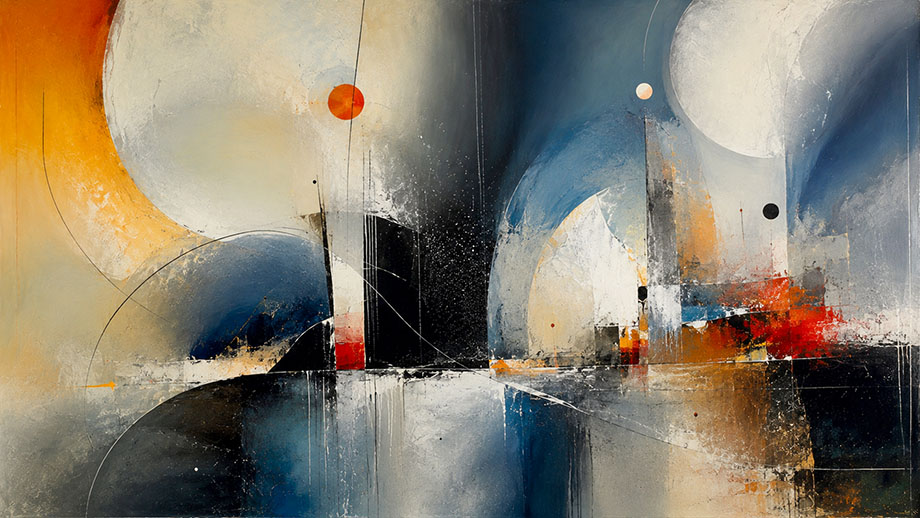
Note: Even when it comes to making art, AI software is pretty useless if you don’t give it human ideas and direction. It’s just “Photoshop on steroids.” In the hands of someone with talent and taste, it can produce things worth using. If you give it no idea or concept, it produces junk. I just asked OpenAI’s image generator to give me its best fine art — with no other instructions — and it gave me the generic slop you see below. If you’re doing art this lousy, you need to up your game anyway. This looks as though it should be on the wall of some dentist or accountant who has no taste.
 Bias, incompetence or manipulation? Things aren’t always what they seem
 Despite promise of new tech, today’s journalism is just trivia
 I just found out an ex got married – and I’m shocked to feel jealous