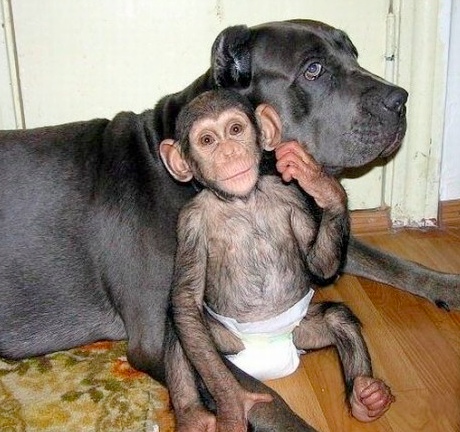
I’ll probably never know the full story behind this — and it has nothing to do with the things we normally talk about around here — but it was too amazing not to share.
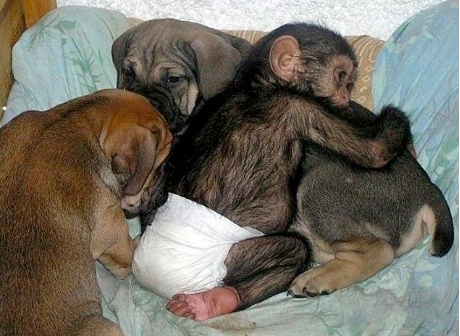
After a mother chimp died at a zoo, one of the zookeepers brought her baby monkey home in order to care for it. The employee’s dog had just had puppies. Unexpectedly, the mother dog bonded with the baby chimp and the chimp ended up seeing the puppies as his siblings. You’ll find nine pictures on this page. I’ve included a couple just to give you an idea. If you love dogs — or chimps — you’re going to love this.
If anybody happens to run across the full story, such as where this happened, I’d love to update this.
Note: I still haven’t found anything definitive about this, but Jeremy Barger found a link with a slightly different version of the story. According to that version, it happened two years ago at a Russian zoo and the chimp’s mother had rejected him instead of having died. It’s hard to say which version is correct.
 Don’t complain about debt when you borrow $35,000 to study puppetry
 Please be patient with my site as it’s being completely remodeled
 You can’t see inside my heart, but my words invite you to know me
 Things you do in life determined by who you decide you want to be
 If you don’t feel overwhelmed, you just aren’t paying attention
 What’s the difference between a cop and an actual peace officer?
 Thugs attacking private property aren’t anarchists; they’re vandals
 Do you want to live in a world where people like this decide who gets power over you?