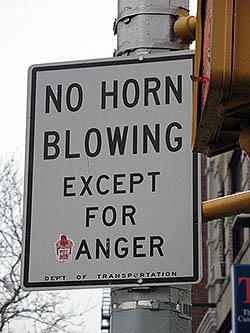
 I caught myself acting like an angry jerk the other day. I don’t like myself when that person comes out. It reminds me too much of some things I grew up with — and of things I’ve spent quite a bit of time trying to escape.
It really wasn’t a big deal. It was just a few seconds. Nobody else would remember it. Few would have noticed when it happened. But it’s stayed with me since late last week, almost taunting me like something from the past that I thought was dead.
I was driving down a busy road near my house last week. I think it was Thursday afternoon, but it might have been Friday. There was a car trying to turn left out of a business, so the driver had to turn across a lane of traffic to get to another one. Instead of waiting for a time when traffic was clear in both directions — or turning right and then turning around — he instead pulled out and blocked one lane of traffic completely while he waited for the other lane to clear so he could pull out.
What he did was rude and against all traffic rules. He ended up holding up quite a number of people for 30 seconds or so, which seemed a lot longer while it was going on. But in the scheme of things, it wasn’t a big deal. I wasn’t in the hurry. It didn’t affect my life one bit.
But I was angry. He was violating the rules. He was cheating. He was holding me up. I blew my horn in righteous indignation.
 FRIDAY FUNNIES
 FRIDAY FUNNIES
 Italy sending seismologists to jail for failing to predict big earthquake
 Goodbye, Emily (2009-2015)
 Redemption of ’Bama’s Jalen Hurts illustrates what sports teach us
 Corrupt Trump isn’t even hiding half-billion dollar bribe anymore
 ‘Can you trust this administration?’ No, but I don’t trust any president
 There’s pain in many faces I see, as reality doesn’t match dreams
 Existing biases dictate how you see grand jury decision in Ferguson, Mo.