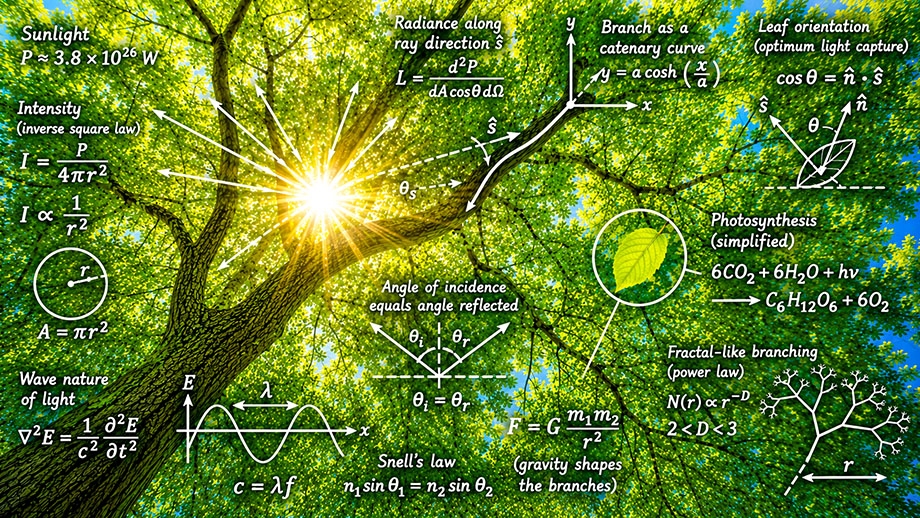
The truths that matter most in life cannot be proven.
I know that love is real, but I can’t prove it. I am absolutely certain that some things in this world are indescribably beautiful. Painfully beautiful. I know those things matter in ways that I can’t explain or understand. I’m certain that there is a reality beyond the physical world I can see and touch. I know there’s a creator — who I experience as God — who is just as real as anything I can touch or see or hear.
I can’t prove any of these things, but I know they’re true.
For me, they’re not theories or hopes or abstract concepts. They’re facts about reality. All of these things are part of my knowledge — but it’s “irrational knowledge.”
Maybe “non-rational knowledge” would be more precise, but I adopted this phrase from a distinction that Russian novelist Leo Tolstoy made between rational and irrational knowledge. Rational knowledge is what we get from science and other sorts of experimentation with the physical world. Irrational knowledge is what we feel as though we just know — through intuition, gut feeling, faith, whatever you want to call it.
My version of irrational knowledge might be different from yours. And that’s OK. But when we look at human groups around the world and over long periods of time, we find that some shared intuitions about irrational knowledge are pretty widespread.
Rational knowledge helps us to survive and to live in prosperity. Irrational knowledge feeds our hearts and gives us purpose and meaning.
The longer I live, the more I value meaning and the less I value prosperity.
 FRIDAY FUNNIES
 You’re wrong! And if you don’t agree with me, you’re an evil, lying moron
 You can’t see inside my heart, but my words invite you to know me

 ‘Winner-take-all’ culture fuels hatred in debate about our future
 The things we regret the most show us what we really value
 In ’98, Ron Paul warned U.S. policy was leading to terrorist attacks
 Radical Muslim effort to stop speech points to risks of multiculturalism
 My drive to be perfect led to lack of compassion for self and others
 THE McELROY ZOO: Meet William, the little kitten who conquered