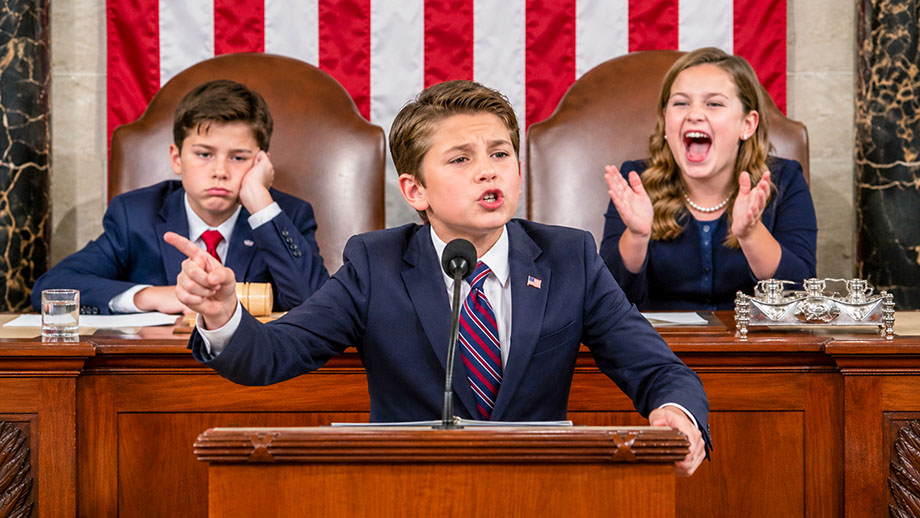
I’m trapped in a society where all the important public figures are middle schoolers.
Not actual middle schoolers, of course. Many of the loudest and most influential voices in our culture are wealthy executives, media personalities, political leaders and adults with millions of followers. But the most popular and prominent of them behave with the emotional maturity of a 12-year-old trying to dominate a cafeteria conversation.
Every disagreement becomes a playground fight. Every issue becomes tribal. Every insult demands retaliation. Every thought must be expressed immediately. Every opinion must be performed publicly. Every emotional reaction becomes content.
And the louder, more impulsive and more outrageous someone behaves, the more visibility that person receives.
That’s not happening by accident.
Years ago, media critic Neil Postman warned that television was transforming public life into entertainment. (Read Postman’s “Amusing Ourselves to Death.” Please.) Television rewarded personalities more than ideas. It rewarded emotional immediacy more than thoughtful reflection. Politics, journalism, education and religion all slowly began adapting themselves to the demands of a medium built primarily for amusement.
But television now seems almost quaint — and downright intellectual — compared to what came afterward.
Social media didn’t merely continue those trends. It automated and intensified them.
 Will those on the left upset about Halliburton now go after Obama?
 Miss. church turns back clock by refusing to marry black couple
 The best romantic relationships end up becoming mutual rescue
 Nature’s renewal and growth boost my hope for my own life each year
 New information demands that I change some of what I think I am
 For most men, ‘I’m a nice guy,’ means, ‘I’ll always be a loser’
 Into the light: Is it scarier to face death or to learn how to live?
 What if the best you can offer to someone will never be enough?
 Food addiction means you’re missing something important that you need