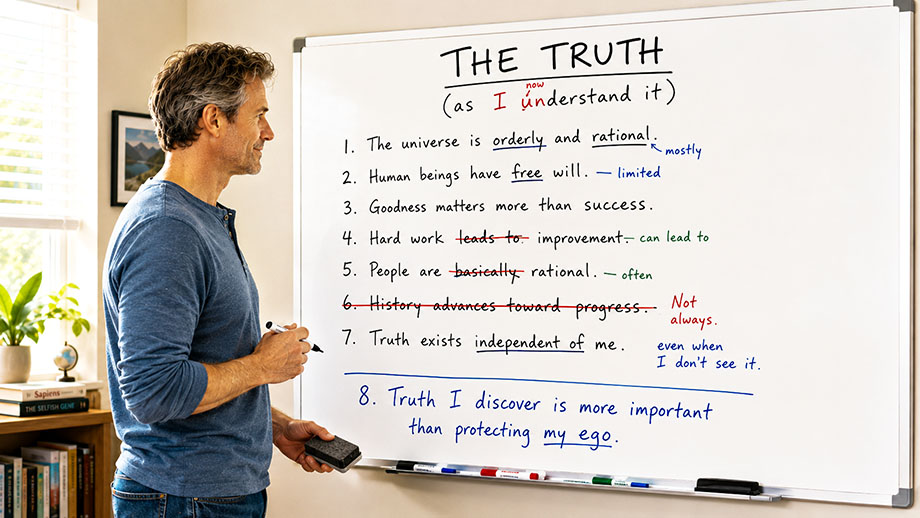
By the time I was in college, I knew everything. My beliefs about politics and theology and society were firmly fixed. I’d been taught almost everything and I figured out the rest.
Or so I thought.
Eventually, a bit of humility started to erode my arrogance. I finally had to ask myself how I could have been so lucky to have been born into the only culture and country and religious group to have everything figured out correctly.
When I realized how absurd it was to think that could have been true, I was forced to look at what I believed and ask myself why I believed those things.
I went through a lot of deconstruction of what I believed. The process was painful at times. Eventually, I firmly embraced some of what I’d been taught and rejected other parts of it. This was a terrifying process that forced me to be vulnerable to the scary possibility that I had everything wrong.
Years later, I’m nothing like the person I was when I was young. My values are the same, but many of my beliefs have changed. I’ve realized now that a lot of people believe changing your mind is a sign of weakness or failure.
I’ve come to see that the power of change has given me more joy and freedom and confidence than I ever had when I knew everything. And I couldn’t have experienced that without accepting that I’d been wrong.
 Life-threatening accident for child puts my tiny problems into context
 Corrupt Trump isn’t even hiding half-billion dollar bribe anymore
 When voters insist on lies, politicians follow their incentives and lie
 Instinctive desire to ‘do something’ almost always leads to bad policy
 Does mainstream schooling model bring out the worst in teen-agers?
 What did he have to lose? Man’s crazy tactic leads to romance
 Art and culture are keys to winning the future for individual liberty
 My books are time machines that tell you where (and who) I’ve been
 Next, this city is going to be selling lemonade and holding bake sales