
Even when I was a child, my Aunt Bessie seemed impossibly old.
She was actually my great aunt, but I knew her better than either of my actual aunts. After we moved to Jasper, Ala., so my father could take care of his aging parents, I spent a lot of time at her house. Her husband, Uncle Larkin, had been sick and somewhat cranky all my life, so I spent far more time with her than with him.
Aunt Bessie seemed like the cheapest woman on Earth. She shopped at stores that sold goods with some sort of flaw, because she said it was the only way to get a bargain. She ate the cheapest cuts of meat imaginable. She was incredibly frugal.
Most of all, though, she almost never threw anything away. It didn’t matter whether it was a rubber band or a scrap of fabric or a piece of string. She would store such junk away and say quietly, “I might need it someday.”
Aunt Bessie was only 24 years old when the Great Depression started, but it left an imprint on her which I never understood — and I fear we’re all about to learn what fear taught her.
 Walls built to protect heart keep others from giving what we need
 What do we prove with huge houses we can’t afford to pay for or even fill?
 Problem for schools: ‘stop students from becoming this advanced’
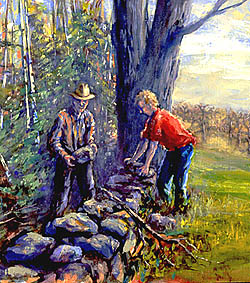 Practically and legally, it’s true: Good fences make good neighbors
 My future plans are solid, but intuition says prepare for change
 As I quietly watch my world burn, I’m painfully aware this isn’t fine
 It’s hard to take a scary chance, but success can be breathtaking
 Childhood programming makes it hard to believe I’m ‘good enough’
 Hate all Muslims or all Christians? Your thinking is evil and warped