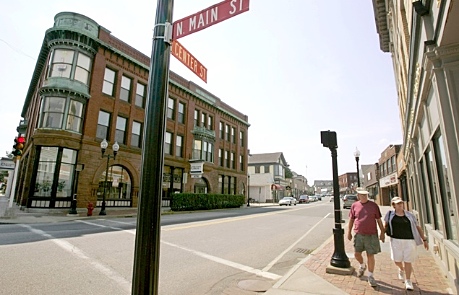
If you plan to spend any time in Middleborough, Mass., you might want to be careful if you’re the sort who enjoys slinging four-letter words around. The town’s residents voted 183-50 Monday night to enact a fine for the public use of profanity, so police will have their ears open.
In modern American society, this is typically seen as a conflict between free speech and civility. Some people believe you should be able to say anything you want without government interference, and others believe that offensive and vulgar behavior should be prohibited. Merchants in the town say some of their customers have been uncomfortable with groups of teens hanging out downtown and swearing loudly. So which side is right?
I’m an advocate of keeping government completely out of the business of censoring speech, but I’m also someone who detests profanity. (I’m one of the few people you know who you’ll never hear it from. I didn’t grow up with it and I’ve consciously avoided using it. It’s not what I want to be.) So it sounds as though these two competing values are in conflict and there’s no logical way to resolve it.
That’s sort of true. There’s no logical way to resolve it under the current system of “public” ownership of property and the rules that come with “public” space. But what if the real issue isn’t free speech vs. civility? What if the real issue is who owns property — and who should be allowed to make the rules?
 Tuesday’s Senate vote reminds me of German ‘Enabling Act’ of 1933
 Lesson from U2: Rejection doesn’t necessarily mean it’s time to give up
 Our reactions to others’ suicides say something about how we view life
 Goodbye, Daddy
 Though it’s helpful to have talent, that won’t guarantee success
 Painful longing is too powerful to express heart’s anguish in words
 My life will matter only if I can show love and meaning to others
 For most men, ‘I’m a nice guy,’ means, ‘I’ll always be a loser’
 Eviction moratorium is pure theft; it’s a sign of creeping socialism