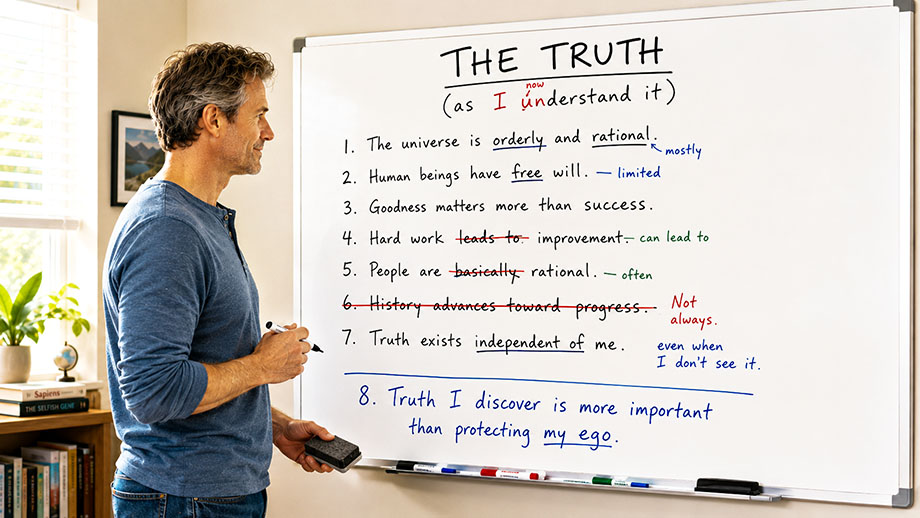
By the time I was in college, I knew everything. My beliefs about politics and theology and society were firmly fixed. I’d been taught almost everything and I figured out the rest.
Or so I thought.
Eventually, a bit of humility started to erode my arrogance. I finally had to ask myself how I could have been so lucky to have been born into the only culture and country and religious group to have everything figured out correctly.
When I realized how absurd it was to think that could have been true, I was forced to look at what I believed and ask myself why I believed those things.
I went through a lot of deconstruction of what I believed. The process was painful at times. Eventually, I firmly embraced some of what I’d been taught and rejected other parts of it. This was a terrifying process that forced me to be vulnerable to the scary possibility that I had everything wrong.
Years later, I’m nothing like the person I was when I was young. My values are the same, but many of my beliefs have changed. I’ve realized now that a lot of people believe changing your mind is a sign of weakness or failure.
I’ve come to see that the power of change has given me more joy and freedom and confidence than I ever had when I knew everything. And I couldn’t have experienced that without accepting that I’d been wrong.
 Does your life feel wasted so far? Maybe your best is yet to come
 Lie like a professional politician: Step-by-step guide in 3 lessons
 We fill life with noise because silence forces us to hear truth
 Material things can be replaced, but loved ones worth far more
 Sharing ridiculous things we enjoy is a special part of love
 To become a ‘runaway slave,’ you have to free your own thoughts
 Democrats to Cory Booker: There’s no room for honesty in politics
 What if our best romantic decisions come by listening to ‘selfish genes’?
 Choice of spouse alters everything about future for you and your kids