“You can ignore reality, but you can’t ignore the consequences of ignoring reality.”
— Ayn Rand
I rolled my eyes when my friend told me what had happened in her family. About six months ago, a man related to her had moved in with his own brother’s family. It was just for a couple of weeks, until he got back his feet after a divorce. He had promised to find a job and quickly get a place of his own.
Six months later, the man still has no job. He watches television and plays video games while his brother and sister-in-law go to work. Has he applied for any jobs? Who knows? Nobody with sense believes a word he says. My friend said the brother who’s supporting the man called her this week.
“I don’t know why he’s not working,” the brother said. “He promised he would. I don’t know how to get him to leave.”
My friend and I both felt amazed. The deadbeat has always been a deadbeat. He’s never been responsible enough to keep a job. He married a woman who was willing to believe his lies about changing, but she quickly threw him out when he was lazy and then became verbally abusive, especially when he was drinking.
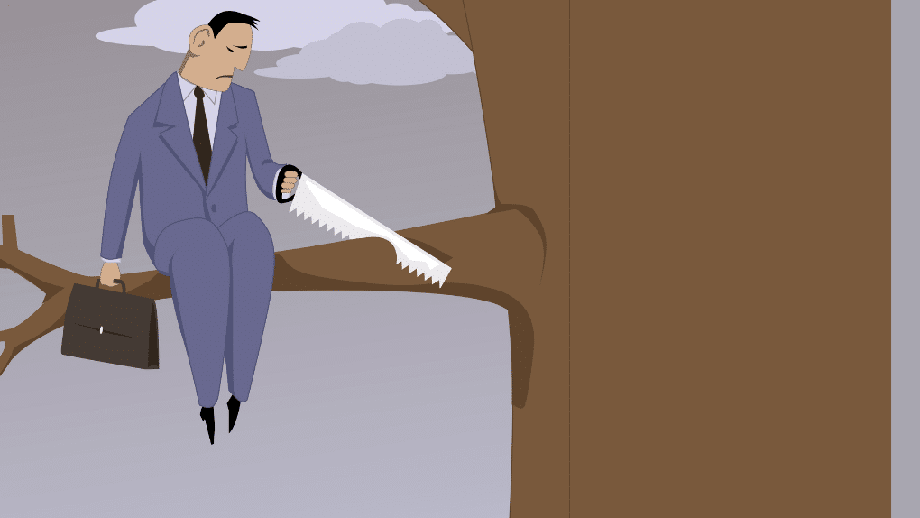
But for some reason, the deadbeat’s brother is surprised at all this. Why? It’s because we keep expecting people to be something different from what they’ve shown us they really are. As a society and as individuals, we all seem to be deeply in denial when it comes to objective reality.
 Not satire this time: In New Zealand, one model cries discrimination
 Real love is spiritual experience that connects me to the cosmos
 Life choices: What’s important enough to spend your life doing?
 Peace won’t come until you quit obeying long-gone programmers
 Our greatest apparent strengths frequently lead to our downfall
 I don’t really hate you, honest; I’m just afraid you may hurt me
 Muslims protecting Christian church remind us there’s good in all groups
 My utopia’s different from your utopia — and that’s just fine
 Once you’ve found the right love, build your whole world around her