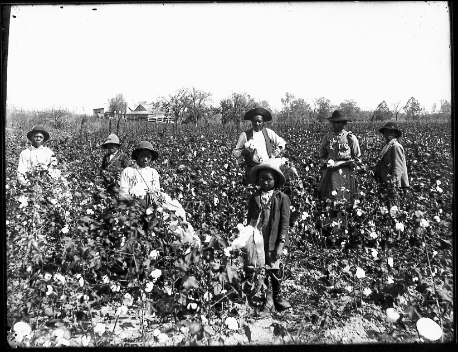
If you were a slave owner in the United States in the 19th century, you probably owed your wealth and continued income to the continuation of slavery. If someone made the case to you that slavery was morally wrong, your first thought probably would have been, “But if we free the slaves, who will pick the cotton?”
The idea of ending slavery was a scary thing to many people in Europe and North America in the 18th and 19th centuries. Many people owned human beings who had been brought from Africa in chains. Those people worked in their fields and did all sorts of manual labor for them. The idea was deeply ingrained in society and it was accepted by many people as right and moral.
The abolition movement was a challenge to all of that. The abolitionists didn’t try to explain to plantation owners how they could earn a living after the slaves were freed. They couldn’t offer completely pragmatic plans for how society was going to go through the transition from slavery to universal equality of rights among races.
They simply made the case that slavery was a moral abomination. Some of them used gentle persuasion. Some of them preached fiery sermons, but still advocated peaceful change. And some, such as John Brown, tried to spark slave rebellions through violent means.
 ‘American Idol’ for politics? Here’s real democracy in 2012 election
 Free cities or charter cities: What’s the difference? Does it matter?
 Texas judge beating his daughter exposes truth behind coercive state
 Winners and losers: After Iowa, where do GOP candidates stand?
 Only certainty of life is that every one of us crosses River Styx alone
 Loving father’s pride in daughter easily bridges our language gap
 Do they allow dogs at the hotel? Question is why they allow people
 After years of wasting my life, sands of time are slipping away
 Trying to force others to be like us destroys loving relationships