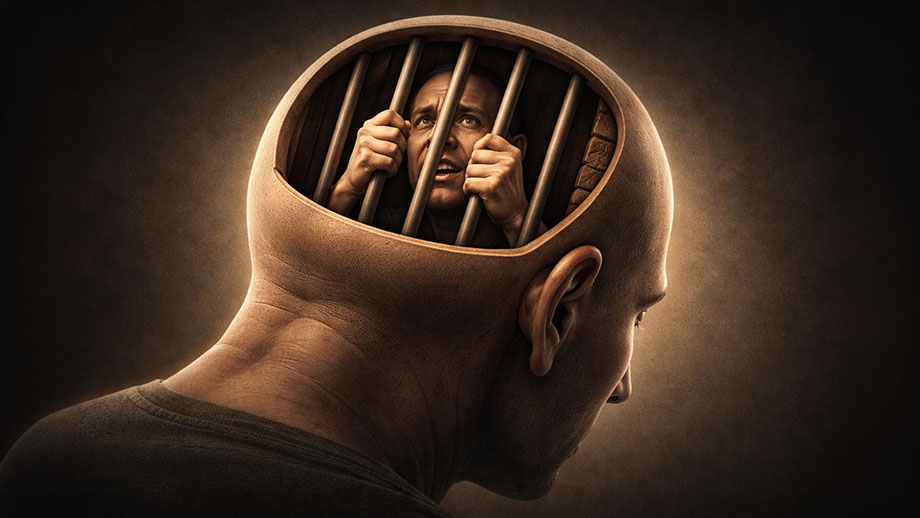
The most fundamental error that we all make is assuming we can understand what it feels like to be inside someone else’s mind and heart.
It’s not a conscious decision to believe this. It’s just a natural assumption we start with to one extent or another. But the more I’ve become aware of this error — first by observing myself and then by observing and re-interpreting others — the more aware I’ve become how pervasive it is.
What’s worse, I’ve realized that almost all of the manipulators in our lives use this assumption to control us.
Imagine you are locked alone in a bare cell with a locked door. You can’t see anyone else. You can’t hear anyone else. You have no idea where you are or why you’re there. You just know you’re alone.
 Random stats after five months
 Love & Hope — Episode 2:
 Doing it for the children? No, they’re doing it for the TV cameras
 What if a key to knowing what to do is built into everybody’s gut?
 Politicians sometimes lie even when they know they’ll be caught
 ‘Vast military-industrial complex’ keeps growing and keeps killing
 News is just trivia, so why do we treat it as though it’s important?
 Is Obama playing politics with war on terror? Of course, just as Bush did
 For an American church, the Fourth of July should be just another day