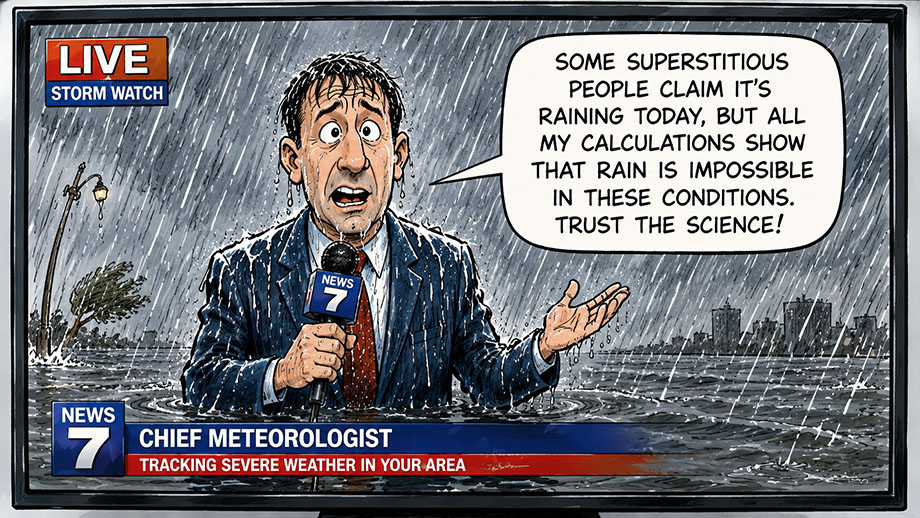
Our culture is locked in a battle over objective reality.
The ability to observe objective facts and then use reason to interpret them was at the center of human progress for the last few hundred years. Science that came out of this allowed us to improve the world. We made ourselves fabulously wealthy by historical standards. We improved the lives and health of everyone.
Today, we’re slowly throwing all that away.
One group claims that men can become women — and vice versa — just because they feel that way. They claim that subjective feelings — across a wide range of issues — determines what is allowed and what is not.
Another group is perfectly happy to follow politicians who tell lies at an unprecedented scale. These people don’t mind the lies and don’t mind ignoring reality they don’t like — just as long as their side holds power.
In the meantime, a few of us still insist that truth matters. Objective reality matters. Character matters. Honesty matters.
For those of us in that intellectual and moral “no man’s land,” we watch as clowns to the left and jokers to the right insist that seizing power and defeating enemies is all that matters.
And some of us know that nothing can change until our society can once again show a principled commitment to objective reality and truth — as a broad consensus.
 Is Paul Krugman serious or is this some kind of weird performance art?
 What makes good science fiction? Aya Katz and I discuss ‘Podkayne’
 My endorsement goes to the man who can make coercive state work
 Food addiction means you’re missing something important that you need
 Narrow focus causes one to see a specific tree and miss the sunset
 For equality, we must redistribute eyeballs fairly, my friends
 Love & Hope — Episode 14:
 If you start at love, it’s easier to get to hate than to indifference
 I’m paralyzed by fear my choices won’t match needs of future wife