Almost anyone can type. Some of those people can write and think clearly enough to shape a coherent story. A tiny fraction of those do it well enough to get a good novel published.
Anyone can splash paint onto a canvas. Even if you have no talent for illustration or composition or brush strokes, you can make painted shapes and call it modern art. A tiny fraction of those can convince critics that their work should be sold in galleries.
It’s true for every field of art. With the tools that are readily available today, almost anyone can make a creative project — a film, a sculpture, a photograph, a book. A few of those will be really good.
It requires talent and work and patience and luck to produce something that most people would see as art. It’s incredibly difficult. It’s something many people spend a lifetime trying to do.
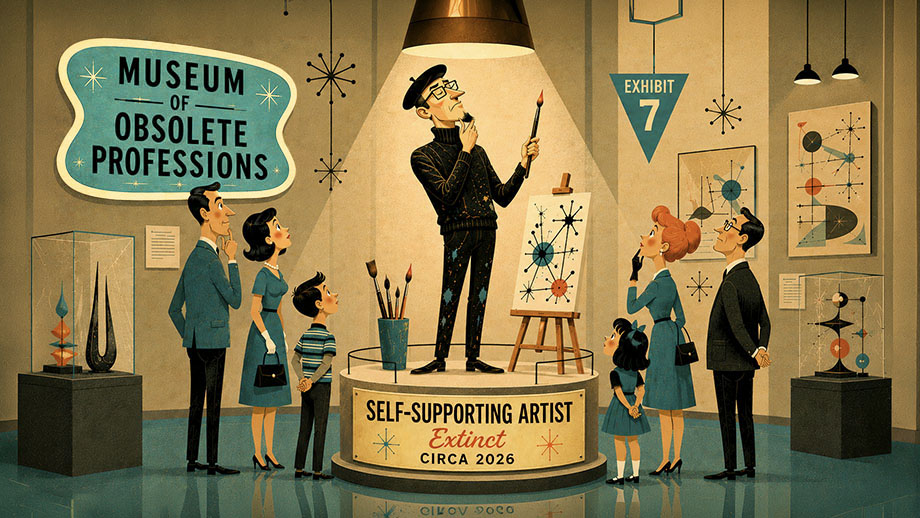
But as difficult as those things are, it’s even harder to earn a living today with art.
For some people, it’s simply because their work isn’t good enough. But even many people who produce excellent work can no longer make a living from the art they most want to create.
The world has changed in ways that make things very hard for creative people today. I don’t like the changes. I’ve ranted about those changes and been angry about them, as have many creators.
But the media world of the past is gone. It’s not coming back. For me, that means I have to change. It’s time for me to stop fighting reality.
 Still relevant six years later: ‘We’re the Government — and You’re Not’
 How would your priorities change if you had a chance to relive life?
 When you can’t call one you love, silent phone just taunts your need
 Maybe it wasn’t correct choice, but I’m not having surgery Friday
 Chick-fil-A boycott misguided; tolerance has to run both ways
 Why do we create families? It’s a ‘matter of the heart,’ not head
 Don’t blame politicians; you’re to blame for growth of government