This world is a fallen cesspool of hate and misery and sin. There is no hope here.
This world is also beautiful and loving and perfect. It’s a divine miracle.
How can both of these be true?
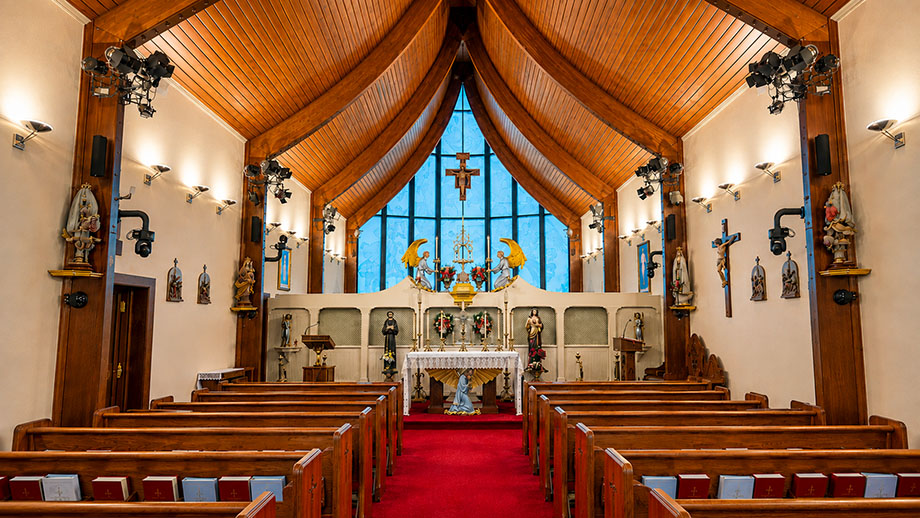
When I entered this chapel to pray late Tuesday afternoon, my frustrated and chaotic mind was firmly fixed on seeing the world at its worst. I saw an image of a world where the people are bumper to bumper on a highway to a hell of their own making.
In the silence and solitude of the next 90 minutes, my mind was filled with the beauty and the wonder and the love of a miraculous realm. It wasn’t just a fantasy, though. I saw bits and pieces of that loving world in people I knew.
As I prayed and meditated over these thoughts, I saw the worst of the world very clearly, but I also saw the best of the world. I struggled to see which one was the truth.
Then I suddenly realized that the window on the front wall of the chapel was like a metaphor. We can choose to focus on the world “out there” — the cesspool we see on the news and all over social media — or we can focus on the loving truth “in here.”
They’re both real. Both worlds are the truth.
But it’s our choice which one to focus on. It’s our choice which one to experience. And it’s our choice which one we choose for our own lives.
 I’d forgotten what I said about her necklace, but she hadn’t forgotten
 How does a father overcome his own issues to raise a new baby?
 We fill life with noise because silence forces us to hear truth
 Moral priorities: ‘If we free the slaves, who will pick the cotton?’
 Nobody has the right to a position in your life which you don’t want
 Cop pepper-spraying protesters is symbol for arrogant police culture
 English teacher tells Wellesley grads: ‘You’re nothing special’ — not yet
 Student scolded for saving a life; School doesn’t ‘condone heroics’