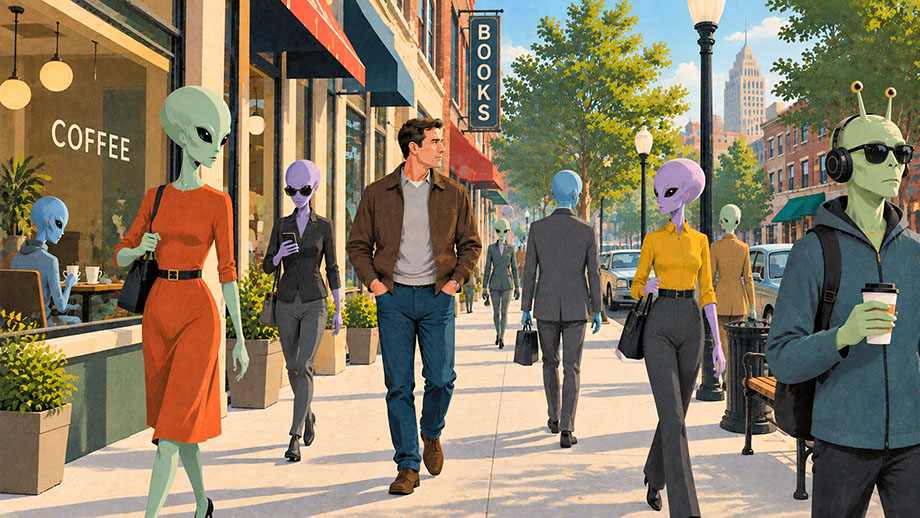
I keep being reminded that I don’t fit in this place.
That thought is always in the back of my mind. I’ve felt it for most of my life. But there are certain days when it seems as though the reminders are everywhere. After another one of those days Thursday, I am feeling incredibly alone tonight.
Again.
Nothing bad happened to me Thursday. Nobody rejected me or insulted me. I didn’t have an argument with anybody. Instead, I had two perfectly friendly conversations with people I’ve known for years, but I walked away from them feeling strangely depressed and isolated.
The specifics of the conversations don’t matter. In fact, explaining them would probably sidetrack what I have to say onto different issues. Neither person said anything shocking or offensive. They both simply expressed perfectly ordinary assumptions about life and the world around us — assumptions which wouldn’t have seemed noteworthy to most people.
But those two conversations jerked me back to reality. They reminded me that I’m the alien here.
 As a photographer, be prepared to doubt your talent every single day
 If you made an error yesterday, it’s ‘foolish consistency’ to stick with it
 We need loving communities so we can know, ‘You’re not alone’
 Capitol rioters weren’t SS troops, just woeful losers living a fantasy
 Step in the right direction: U.S. ad group bans cosmetic photoshopping
 Goodbye, Courtney Haden
 If we disrespect skilled trades, we’re ignorant and arrogant fools
 To stay sane during life’s battles, aliens need places of sanctuary
 In a relationship, some words more important than ‘I love you’