 Why do people remain in situations in which they’re unhappy? Why do people hate their jobs, but remain there? Why do people in miserable marriages remain, frequently producing children to join in the dysfunction? And why do people who see the sickness of a failing political system remain loyal to it rather than look for alternatives?
I suspect it’s largely because people have trouble dealing with uncertainty. They might be miserable with what they have, but they’re unwilling to give it up until they have proof that the alternative is better. They’re scared to step out into the uncertainty of taking a chance and they’re scared to have faith that they can build something better.
It’s uncertainty that makes people terribly uncomfortable with certain situations and even certain art. In the work of M.C. Escher, we see a perfect example. Instead of painting normal and understandable things in the world around us, this brilliant Dutch artist created works that feel uncomfortable to many people, because much of it feels contradictory and uncertain, such as the example above. (Which way is the water flowing, anyway? How can what you’re looking at even exist?)
 What if other people see you or hear you differently than you do?
 If foreigner had killed 16 Americans, we wouldn’t be looking for excuses
 ‘Non-profit’ spent $330,000 in DC taxpayer money to open strip joint
 ‘I don’t want Mommy to leave, Amber, but that’s her choice’
 I’m shutting the whole world out, but I’m also waiting to be rescued
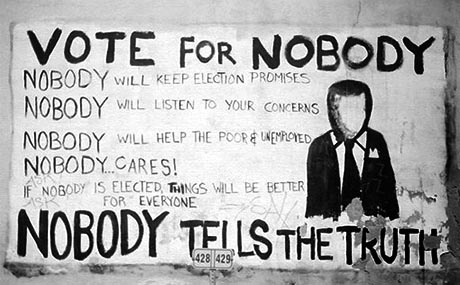 If you participate in sham of voting, you’re responsible for what it creates
 Donald Trump’s jingoistic tribalism marks him as a dangerous buffoon
 ‘Thanks for sharing your process’ is wiser than responding in anger
 The biggest question a human faces is how to live a good life