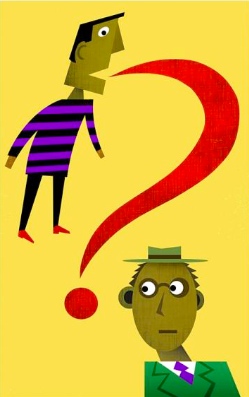
 I’ve been talking a lot recently with a woman who’s from Europe. She lives in this country, so her English is excellent. Still, since English isn’t her native language, there are times when there are tiny gaps in communication between us — enough that it’s prompted me to think about how people use words to communicate.
There are times when I might use a particular word or phrase and she will interpret it as something entirely different from what I intended to convey. It’s not that she’s misunderstanding the words themselves. It’s simply that English words can mean so many different things in different contexts.
I’ve noticed from talking to her that some things we say — that we understand to mean certain things — can mean entirely different things if you interpret the words literally and don’t have decades of experience in learning the cultural context.
Even simple things can be confusing. She was going through something potentially difficult this past week, so I sent her an email to encourage her and say that I’d be “thinking about you” as she went through the issue. She had to ask — just to be sure — whether “thinking about you” means something different from “thinking of you.”
The whole experience has given me a new appreciation for how difficult English is to learn for someone who doesn’t grow up speaking it.
As I’ve pondered how language works between us — how it sometimes facilitates communication and sometimes impedes it — I’ve thought about why miscommunication of all kinds between humans is so common and why it seems to be so hard to improve.
 Each experience of beauty and love stands alone, different from the rest
 Do great dreams really come true or do they just serve to haunt us?
 I’m not sure what’s left to say about politics, so here’s a picture of a cat
 Don’t ever make politicians angry or they might assassinate you, too
 If you’ve gotten on the wrong bus, nothing changes until you get off
 China’s one-child policy: Unintended consequences on a grand scale
 Patterns that made old mistakes keep us making same old errors
 Goodbye, Merlin (2003-2022)
 ‘Post-racial’ America? We’re nowhere close to that — and may never be