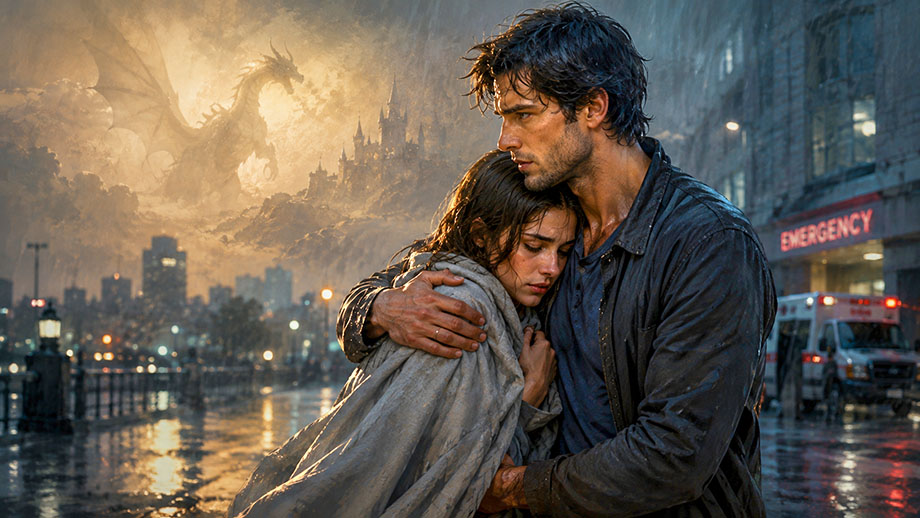
I’ve always wanted to be the hero. Even more than that, though, I wanted to be her hero.
It’s the oldest fantasy in my childhood memory. I have no idea how it started. I don’t remember what could have put the idea into my thoughts, but I was still a very small child when it became an obsession for me.
The girl was always in trouble of some kind. I made up all sorts of stories each night as I went to sleep. The specific dangers changed, but the pattern was always the same. The girl I loved was in trouble. She needed to be rescued. I came to her rescue in her moment of need — and she adored me as her hero and rescuer.
As an adult, this sort of story comes with all sorts of baggage, of course. Mature adults aren’t supposed to take such stories seriously. Some even claim that this historical and mythological imagery is sexist — that a woman shouldn’t need to be rescued and that a man shouldn’t want to be her hero.
But I don’t care. At my core, I still want to be her hero. When my princess is deepest in distress, she calls out for help and I rescue her. It’s a need that’s deeply embedded in culture and possibly genetics. And even though it’s ridiculous imagery from a child’s fairy tales, I still want to rescue my princess.
 When life becomes too passive, we stop earning our self-respect
 FRIDAY FUNNIES
 Ayn Rand’s legacy: Should we consider her a ‘great libertarian’?
 People don’t confront ideas today; they lob bumper stickers at others
 As humans live in slums, why do I complain about my privileged life?
 We’re great at making big plans, but God laughs at our intentions
 Ocasio-Cortez and Trump just like characters in ’75 satire ‘Network’
 Why do humans run away from things we really need the most?
 I’m a liar — and you are, too; most of all, we lie to ourselves