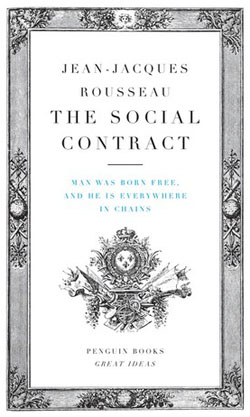
 I never agreed to be ruled by a state, yet philosophers and political scientists confidently speak of “the social contract” as though it’s something we voluntarily enter into. It’s a coercive fraud.
If a car dealer unilaterally parked a vehicle in your driveway and demanded that you started making payments for it — payments that he determined on a car that he chose for you — there’s little question that you would refuse.
“By what right do you make this choice for me?” you would ask. “What gives you the right to set the price and the terms? And why do you think I’m obligated to an arrangement I never agreed to?”
That’s exactly what states do, though. The idea of us all having a “social contract” with one another is supposed to make it legitimate and legal. It’s a justification that serves to keep you from demanding to be left alone.
I said something a couple of days ago about this so-called contract and I was planning to write something about it this week. But I just came across an article by Robert Higgs at the Independent Institute’s website that does a great job of showing what a sham this so-called contract is, so I’m going to ask that you read that instead. Would you sign this thing voluntarily?
 Was life planned before birth? What did you come here to learn?
 The best romantic relationships end up becoming mutual rescue
 Shame of not being perfect comes with every new thing I try to do
 World is a surreal alien landscape where nothing makes sense to me
 Sorry, Newt: It’s not ‘isolationism’ to oppose invading other countries
 If you’ll quit worshiping celebrities, their antics will quit shocking you
 What kind of person are you if there’s not a word to define you?
 Hope can be dangerous when the path ahead is dark and uncertain
 ‘Thanks for sharing your process’ is wiser than responding in anger