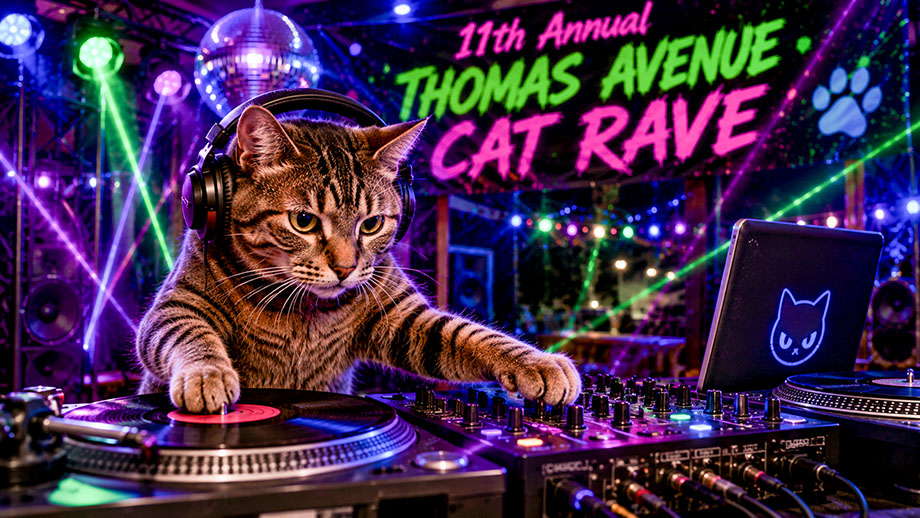
Have you ever wondered what cats do when you’re not home? What might they be hiding from you? Welcome to the secret neighborhood “Cat Rave on Thomas Avenue.”
Just don’t let the humans know about it.
This is the latest of my ridiculous parody videos that I started making a few months ago. My first few videos were very simple, but the last few have gotten increasingly complex. This one is the most complicated and was the most time-consuming.
I’ve been enjoying these as a creative outlet, but they’re not worth a nickel. Very few people have found the YouTube channel where I’ve started posting them, so I’d appreciate it if you would “like” some of them and subscribe to the account if you use YouTube.
 UPDATE: Major changes coming to this website in the next few months
 Shouldn’t you believe everything you see posted on social media?
 Social media creates shallow ties at expense of deeper connections
 FRIDAY FUNNIES
 A year later, my father’s death looms large, but I have no regrets
 VIDEO: Peaceful river reminds me we often miss the peace we crave
 ‘Winner-take-all’ culture fuels hatred in debate about our future
 Authenticity the only path that connects us to people we need
 Was Columbus a hero or a special kind of evil monster? Neither one