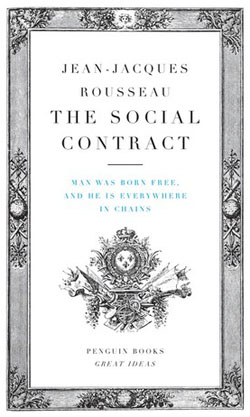
 I never agreed to be ruled by a state, yet philosophers and political scientists confidently speak of “the social contract” as though it’s something we voluntarily enter into. It’s a coercive fraud.
If a car dealer unilaterally parked a vehicle in your driveway and demanded that you started making payments for it — payments that he determined on a car that he chose for you — there’s little question that you would refuse.
“By what right do you make this choice for me?” you would ask. “What gives you the right to set the price and the terms? And why do you think I’m obligated to an arrangement I never agreed to?”
That’s exactly what states do, though. The idea of us all having a “social contract” with one another is supposed to make it legitimate and legal. It’s a justification that serves to keep you from demanding to be left alone.
I said something a couple of days ago about this so-called contract and I was planning to write something about it this week. But I just came across an article by Robert Higgs at the Independent Institute’s website that does a great job of showing what a sham this so-called contract is, so I’m going to ask that you read that instead. Would you sign this thing voluntarily?
 Super Suckers: Indy taxpayers take bath in red ink to build stadium
 Keep trying: The squirrels are pedaling as hard as they can
 Beth’s husband loves alcohol more than he loves her, so he left her
 Preview of 2012? Voter landslide in Colorado against new school taxes
 How do we know when to quit? Persistence may be futile choice
 How can we be lonely while we’re surrounded by billions of people?
 Why am I shocked that a friend’s happy news makes me feel envy?
 Hawks in both Iran and U.S. playing dangerous games leading to war
 Search for sexual pleasure can slowly destroy genuine intimacy