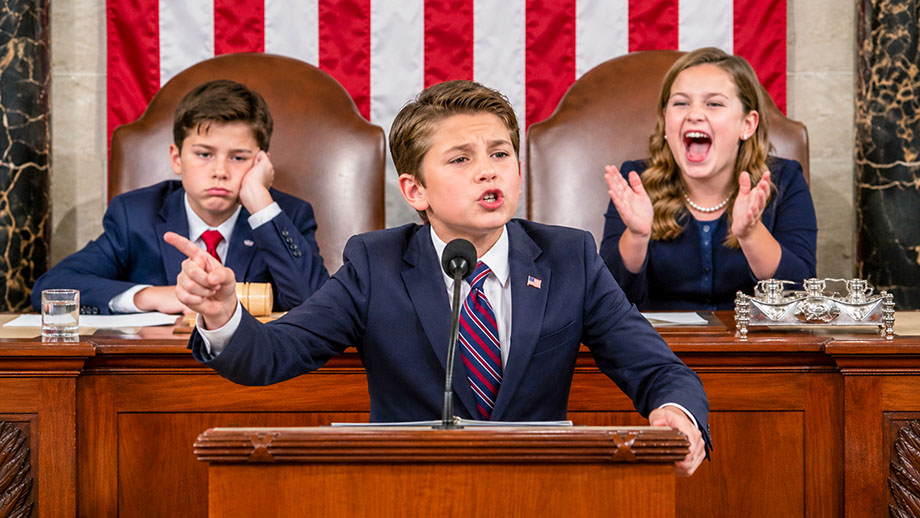
I’m trapped in a society where all the important public figures are middle schoolers.
Not actual middle schoolers, of course. Many of the loudest and most influential voices in our culture are wealthy executives, media personalities, political leaders and adults with millions of followers. But the most popular and prominent of them behave with the emotional maturity of a 12-year-old trying to dominate a cafeteria conversation.
Every disagreement becomes a playground fight. Every issue becomes tribal. Every insult demands retaliation. Every thought must be expressed immediately. Every opinion must be performed publicly. Every emotional reaction becomes content.
And the louder, more impulsive and more outrageous someone behaves, the more visibility that person receives.
That’s not happening by accident.
Years ago, media critic Neil Postman warned that television was transforming public life into entertainment. (Read Postman’s “Amusing Ourselves to Death.” Please.) Television rewarded personalities more than ideas. It rewarded emotional immediacy more than thoughtful reflection. Politics, journalism, education and religion all slowly began adapting themselves to the demands of a medium built primarily for amusement.
But television now seems almost quaint — and downright intellectual — compared to what came afterward.
Social media didn’t merely continue those trends. It automated and intensified them.
 Identity crisis might lead to integration of my inner selves
 Sounds of old music awakened repressed feelings from my past
 Tribal instincts cause us to see others as evil, when they’re just different
 Narcissistic abuse often leaves victims feeling alone in the world
 Serious medical issue will limit
 Is AI software a useful tool or does it dictate how I see myself?
 When the state turns you into a criminal, friends become enemies
 Buggy WordPress plugin knocked site off the air for about 36 hours
 I have no ‘duty’ to vote, even if I agree with you about freedom