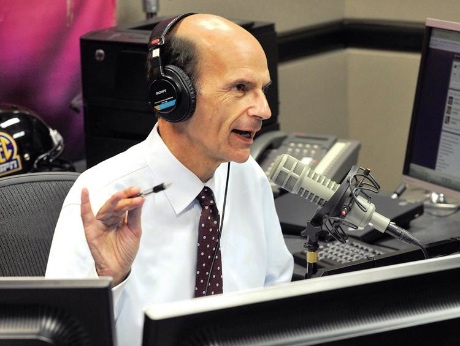
I was ushered into a conference room at radio station WERC-AM. As I sat at a wooden conference table, Paul Finebaum sat across from me. He was flanked by a couple of guys from the production staff of his popular Birmingham radio talk show.
I was nervous and hoped it wouldn’t show.
It was sometime in the mid 1990s, but I can’t recall the year. The show had run a contest to find guest hosts from the audience to be on the air one week in the summer when Finebaum would be on vacation. It was called the Finebaum Fantasy Fill-in.
I had completed a written application to be considered, but I had no idea whether I had a shot. I was excited to get the call to tell me I was one of the ones being interviewed for a slot. And now here I was facing Finebaum and his producers.
In person, Finebaum wasn’t the caustic personality I had known on the air. He seemed strikingly intelligent and almost quiet. On the air, he was boisterous and loud. In the interview, we somehow hit it off.
 The advice people need is rarely what they’re expecting to hear
 Nelson Mandela overcame anger at oppression to become a hero
 Our media consumption devices are slowly eating the real world
 Why should kids OR adults need state permission to sell lemonade?
 When people show you who they are, trust their actions, not words
 Obsession with partisan hatred diverts you from economic truth
 People who invoke ‘fairness’ generally just mean, ‘Do things my way — or else’
 Who is God? What is real truth? All I know is my own experience
 Paradox of choice can leave us longing for certainty of the past


