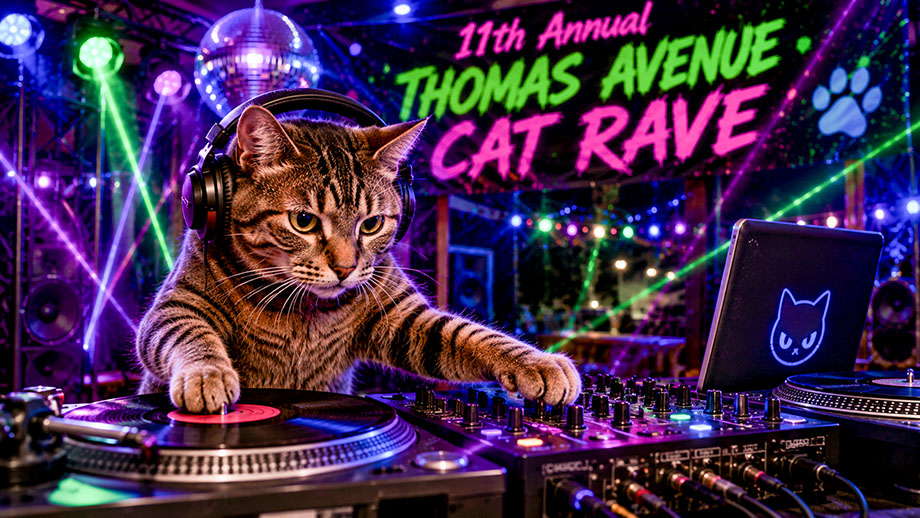
Have you ever wondered what cats do when you’re not home? What might they be hiding from you? Welcome to the secret neighborhood “Cat Rave on Thomas Avenue.”
Just don’t let the humans know about it.
This is the latest of my ridiculous parody videos that I started making a few months ago. My first few videos were very simple, but the last few have gotten increasingly complex. This one is the most complicated and was the most time-consuming.
I’ve been enjoying these as a creative outlet, but they’re not worth a nickel. Very few people have found the YouTube channel where I’ve started posting them, so I’d appreciate it if you would “like” some of them and subscribe to the account if you use YouTube.
 It often takes approach of death to wake us from a dead-end life
 What’s at the root of objections to real freedom? Paternalism
 How can I share what’s obvious when nobody will listen or see?
 Feds to trucking co.: You can’t fire the drunk, but you’re liable for him
 Prohibition was disaster with alcohol, still a disaster with other drugs
 Outer storms will end, but storms in my heart do lasting damage
 Will those on the left upset about Halliburton now go after Obama?
 ‘This path leads to somewhere I think I can finally say, I’m home’
 Getting better at all I do is only way to fight ‘imposter syndrome’