Are you a subject, a citizen or a sovereign? Your answer to that question says a lot about who you think owns you, at least in the earthly sense.
There’s been a lot of talk lately about Eduardo Saverin giving up U.S. citizenship as Facebook goes public. He’s one of the founders of Facebook, so he’s becoming incredibly wealthy because of Facebook’s initial public offering. By living in Singapore and giving up his U.S. citizenship, Saverin is going to save millions of dollars now and save his heirs possibly billions of dollars by avoiding U.S. estate taxes later.
Saverin told the New York Times, though, that his move isn’t about saving money.
“This had nothing to do with taxes,” Saverin told the Times. “I was born in Brazil, I was an American citizen for about 10 years. I thought of myself as a global citizen.”
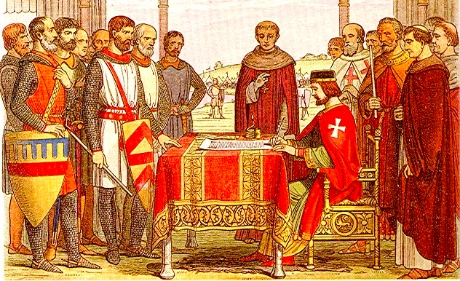
In 1215, King John of England signed what came to be called the Magna Carta. (The full name in English was “The Great Charter of the Liberties of England, and of the Liberties of the Forest.”) The English lords accepted that they were subject to the king, but they tried — sometimes unsuccessfully — to get kings to limit their absolute power over them.
 Creating work that I’m proud of gives me elusive feelings of joy
 Silly controversy over Cadillac ad reminds us we want different things
 Autumn scents send subtle signals every year that it’s time for change

 To the mindless bureaucrats at TSA, a crying 4-year-old is a terror suspect
 Want to start a ‘free city’? Check out the guidelines to see if you qualify
 Why do loving parents let schools teach kids to be conformists?
 Part of me loves you dearly, but warring parts are hostile or afraid
 How can you have convictions while remaining open to truth?
 I am angry that life doesn’t work the way I once learned it should